
Science
Ice Bath Benefits: What Cold Water Really Does
8 min read · Updated 17 June 2026

Cold water immersion has gone from a niche athletic-recovery tool to a wellness ritual you will find everywhere, including here in Ao Nang. But between the hype reels and the honest science, it can be hard to know what an ice bath actually does to your body, and which benefits are well supported versus wishful thinking.
This guide walks through the physiology of the cold shock response, the benefits with the strongest evidence behind them, the claims that are still thin, and who should be careful. The short version: the case is genuinely good for recovery, circulation, and mood, and much weaker for the bigger promises around immunity, fat loss, and longevity.
Key takeaways
- Ice baths trigger a real cold shock response: vasoconstriction, faster breathing, and a sizeable norepinephrine and dopamine release.
- Evidence is strongest for recovery (less muscle soreness), mood and alertness, and gentle circulatory conditioning.
- Metabolism, immunity, and longevity claims are weaker or speculative; treat them as bonus, not the reason to plunge.
- Skip cold immersion right after strength training if muscle growth is your goal.
- People with heart conditions, high blood pressure, or who are pregnant should seek medical advice before starting.
- Start short (one to two minutes), focus on slow breathing, never plunge alone, and warm up afterward.
What happens to your body in cold water?
The moment cold water hits your skin, you trigger what physiologists call the cold shock response. Surface blood vessels clamp down (vasoconstriction), your breathing rate jumps, your heart rate spikes, and your sympathetic nervous system, the “fight or flight” branch, switches on hard. That initial gasp reflex is involuntary and is exactly why you never plunge alone or in deep water you cannot stand up in.
Underneath that dramatic surface reaction, your body is redirecting warm blood toward your core and vital organs. Within a minute or two, most people settle into a controlled, almost meditative breathing rhythm. Learning to slow that breath instead of hyperventilating is most of the skill of cold exposure, and it is the part that carries over into how you handle stress outside the tub.
- Vasoconstriction: surface vessels narrow, shunting blood to the core
- Cold shock: an involuntary gasp and faster breathing in the first seconds
- Sympathetic activation: heart rate and alertness rise sharply
- A surge of norepinephrine (noradrenaline) and dopamine into the bloodstream
What does the norepinephrine and dopamine surge do?
The most striking measurable effect of cold immersion is a large release of norepinephrine and dopamine. In one frequently cited study, immersion in roughly 14°C water raised plasma noradrenaline several-fold above baseline, with a meaningful rise in dopamine as well, and these elevations persisted for a while after getting out rather than vanishing immediately.
Those two messengers govern alertness, focus, drive, and mood. This is the mechanism most likely behind the clear-headed, energised, slightly euphoric feeling many people report for an hour or more after a cold plunge. It is a real, repeatable neurochemical response, not just placebo, though how strongly any individual feels it varies a lot.
Which ice bath benefits are actually proven?
The evidence is strongest in three areas. For recovery, cold water immersion is well documented to reduce delayed-onset muscle soreness and perceived fatigue after hard exercise, which is why athletes have used it for decades. For mood and alertness, the norepinephrine and dopamine response, plus a growing set of small trials, points to short-term improvements in mood, focus, and a sense of wellbeing. For circulation, the repeated constrict-and-dilate cycle is a mild form of vascular training.
One important nuance on recovery: if your goal is building muscle or maximal strength, plunging in the hours immediately after resistance training may slightly blunt the adaptation, because some inflammation is part of how muscle rebuilds stronger. The practical fix is simple. Use cold to feel better and bounce back between hard sessions, but separate it from strength workouts by a day, or skip it on heavy-lifting days.
- Recovery: reduced muscle soreness and perceived fatigue (strong evidence)
- Mood and alertness: short-term lift, driven partly by norepinephrine and dopamine (promising evidence)
- Circulation: gentle vascular conditioning from repeated vasoconstriction (reasonable evidence)
- Caveat: avoid plunging right after strength training if hypertrophy is the goal
What is hyped versus what is real?
Cold exposure does activate brown fat and acutely raises metabolic rate as your body works to stay warm, and early evidence suggests it may modestly support metabolic health. But the leap from “burns a few extra calories” to “ice baths are a weight-loss tool” is not supported. Any metabolic effect is small, and you can easily out-eat it.
Immunity is similar. Some studies report fewer self-reported sick days among regular cold-water swimmers, but the data are mixed, hard to separate from lifestyle factors, and far from proof that cold plunging “boosts your immune system.” Claims about detoxing are not meaningful in a physiological sense; your liver and kidneys handle that. And longevity benefits, while an exciting area of research, remain speculative for cold specifically. Treat recovery and mood as the reliable wins and the rest as bonus-maybe.
Who should be cautious or avoid ice baths?
Cold immersion is a genuine cardiovascular stressor. The cold shock response raises blood pressure and heart rate sharply, and major bodies including the Cleveland Clinic and American Heart Association warn that this can be dangerous for people with heart conditions, high blood pressure, or elevated stroke risk, occasionally provoking arrhythmias. If you have any cardiac history, talk to your doctor before trying it.
Pregnancy is another area to be careful: there is not enough human data to confirm safety, and guidance leans toward avoiding extreme cold immersion unless it continues a long-established pre-pregnancy practice under medical supervision. Also use extra care if you have Raynaud syndrome, uncontrolled blood pressure, or are very new to cold and tempted to push duration. When in doubt, start with a warmer, shorter exposure and build up slowly.
- Known heart conditions, high blood pressure, or stroke risk: consult a doctor first
- Pregnancy: avoid extreme cold immersion without medical guidance
- Raynaud syndrome or poor cold tolerance: proceed cautiously
- Never plunge alone, and never combine cold immersion with alcohol
How does an ice bath feel the first time?
Honestly, the first ten seconds feel intense and your instinct will be to gasp and bail. That is normal. The trick is to exhale slowly, drop your shoulders, and let your breathing settle. Once it does, the panic fades into a manageable, even calming cold, and most beginners are surprised how quickly they adapt. A first session of one to two minutes is plenty.
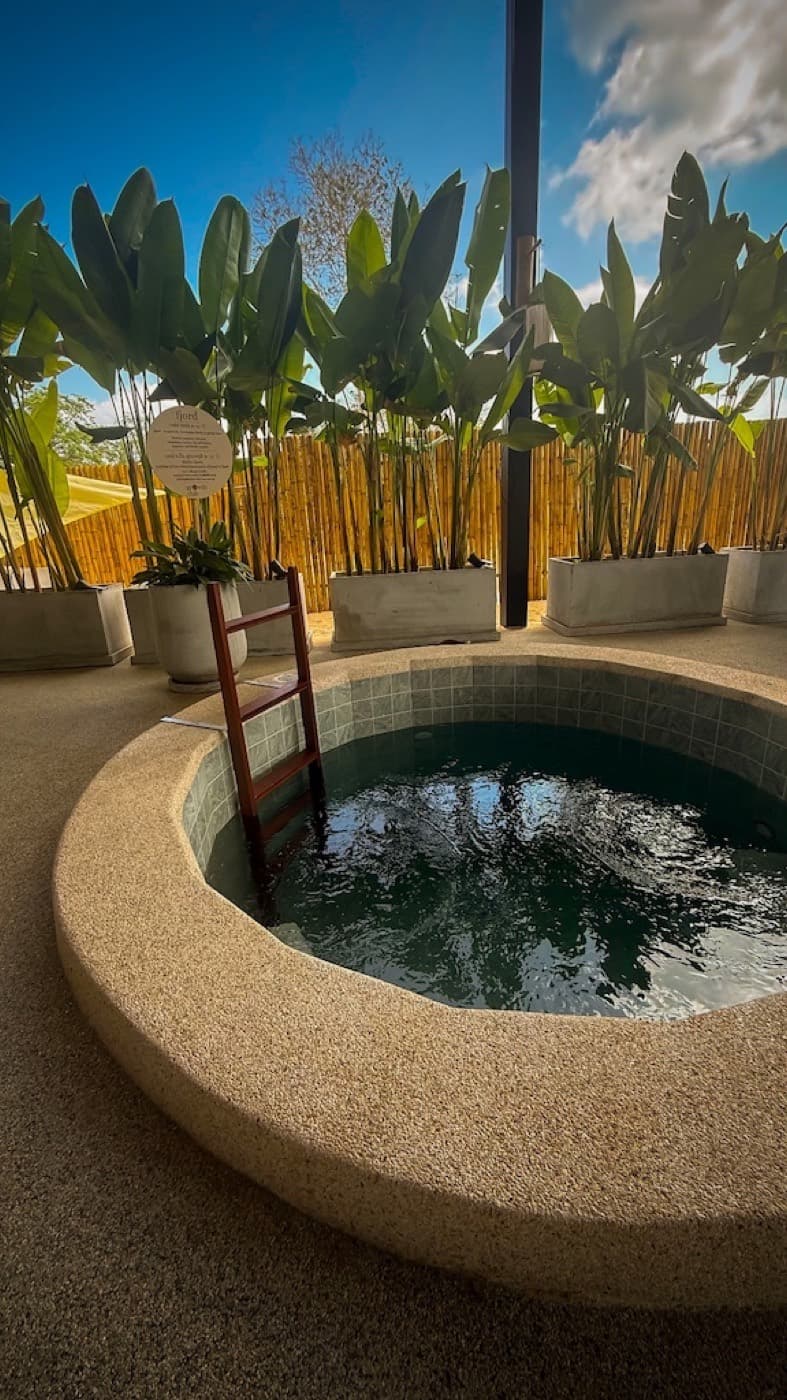
If you want to try it without owning any equipment, a supervised setup makes the learning curve far easier. At Growth Club in Ao Nang you can ease in via the fjord cold plunge at a gentler 9 to 12°C before testing the colder iskall ice bath at 5 to 7°C, all on a day pass (฿400), with the option to warm up afterward in the sauna. Having somewhere to warm up immediately afterward, and someone nearby, turns a daunting plunge into something genuinely enjoyable.
Frequently asked
Most benefits show up in the roughly 5 to 15°C range for a few minutes. Beginners do well starting around 10 to 12°C for one to two minutes and building from there. Colder is not automatically better, and very long exposures add risk without much extra reward.
Only marginally. Cold exposure activates brown fat and raises metabolic rate briefly, and early evidence suggests it may modestly support metabolic health, but the calorie effect is small and easily out-eaten. It is not a weight-loss tool on its own.
For general recovery and feeling fresh, after is fine. But if you are training for muscle size or strength, avoid plunging in the hours right after lifting, since some inflammation drives adaptation. Leave a day, or cold-plunge on rest days instead.
For most healthy people, short daily cold exposure is reasonable. If you have a heart condition, high blood pressure, or are pregnant, check with a doctor first, and always ease in with slow breathing rather than forcing long sessions.
Is Growth Club right for you?
See how the sauna and ice bath in Ao Nang fit your reason for going:
Sources
- Cleveland Clinic Health Essentials — What to Know About Cold Plunges
- American Heart Association — The plunge into cold water comes with risks
- Stanford Lifestyle Medicine — Mental Health Benefits of Cold Water Immersion
- Frontiers in Physiology — Cold water immersion dosing and recovery from muscle damage (network meta-analysis)
This article is for general information only and is not medical advice. Cold and heat exposure carry risks — consult a doctor before starting if you have any health condition.
Keep reading
 How-to
How Long Should You Stay in an Ice Bath?
A practical, safety-first guide to ice bath timing: durations by goal and experience, the 11-minute rule, breathing, warning signs, and warming up.
8 min read → Science
Sauna vs Ice Bath: Which Is Better for Recovery?
How heat and cold each work for recovery, what the evidence supports, and why doing both in contrast is often the smarter answer.
8 min read →